Home / Rheal Software Blog / Using Predictive Analytics to Improve Claims Outcomes in Insurance and Healthcare
Using Predictive Analytics to Improve Claims Outcomes in Insurance and Healthcare
Published on August 14, 2024
Introduction
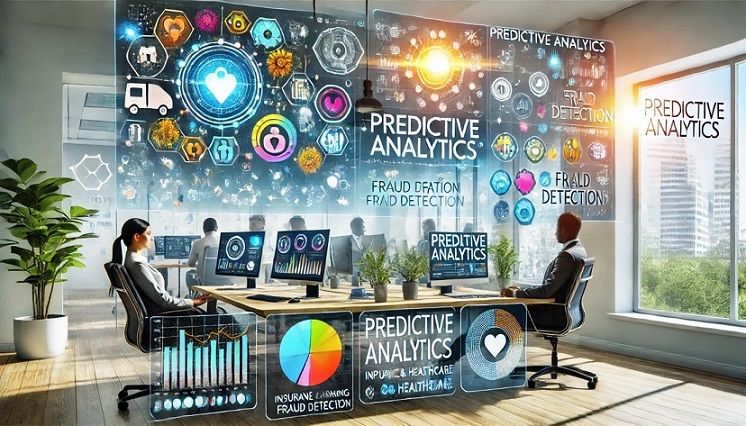
In the insurance and healthcare industries, efficient claims management is essential for controlling costs, improving customer satisfaction, and reducing fraud. Predictive analytics and machine learning (ML) are revolutionizing how companies handle claims, enabling them to forecast outcomes, detect anomalies, and make data-driven decisions faster and with greater accuracy. Predictive analytics provides the ability to analyze historical data to identify patterns, trends, and relationships that are not easily visible through manual analysis.
This article explores the power of predictive analytics in claims management for insurance and healthcare, and how outsourcing the development and implementation of these advanced technologies can help companies harness their potential effectively.
1. Understanding Predictive Analytics and Machine Learning
Predictive analytics involves using statistical algorithms, machine learning, and historical data to predict future events. It is particularly powerful in industries like insurance and healthcare, where large volumes of data are generated and require analysis to optimize decision-making processes. Predictive models can assess the likelihood of certain events—such as claims fraud, patient health deterioration, or insurance policy lapses—and suggest preventive or corrective actions.
Machine learning (ML), a subset of artificial intelligence (AI), plays a crucial role in predictive analytics by enabling systems to learn from data without explicit programming. ML algorithms continuously improve their predictive accuracy as they are exposed to more data, making them valuable tools for claims management.
By analyzing claims data and historical patterns, machine learning models can predict which claims are likely to be complex or fraudulent, and which ones are routine and can be processed quickly.
2. The Role of Predictive Analytics in Insurance Claims Management
Predictive analytics has transformed how insurance companies manage claims, delivering significant benefits that enhance efficiency, reduce costs, and improve customer satisfaction.
A. Fraud Detection
Insurance fraud costs the industry billions of dollars annually. Predictive analytics, combined with machine learning, can help detect fraudulent claims early in the process by identifying suspicious patterns. For example, a predictive model may flag a claim based on a combination of factors, such as unusual geographic location, claimant history, or an abnormal pattern in the timing of claims submissions.
This early detection enables insurers to investigate fraudulent claims more efficiently, reducing losses and improving the overall integrity of the claims process.
B. Risk Assessment and Premium Calculation
Predictive analytics can assess risk profiles more accurately by analyzing various factors that influence claim likelihood, such as age, location, occupation, and lifestyle. This data allows insurers to offer personalized premiums based on the predicted risk associated with each policyholder, leading to more precise pricing models.
For example, health insurers can use predictive models to assess the likelihood of certain medical conditions based on lifestyle and demographic data, allowing them to adjust premiums and coverage accordingly.
C. Speeding Up Claims Processing
Predictive models can prioritize claims based on complexity and risk. Claims that are low-risk and routine can be fast-tracked for quicker resolution, while more complex claims can be routed to experienced adjusters. This not only improves the customer experience by speeding up claims processing but also optimizes resource allocation within the insurance company.
D. Customer Retention and Personalization
Predictive analytics can be used to identify customers who are at risk of leaving or those who may need additional coverage. By analyzing customer behavior, insurance companies can offer personalized recommendations, such as policy upgrades or discounts, improving customer retention and satisfaction.
3. Predictive Analytics in Healthcare Claims Management
Healthcare is another sector where predictive analytics has a transformative impact on claims management and patient outcomes. The healthcare industry faces unique challenges, such as managing patient care costs, reducing claims denials, and improving care delivery. Predictive analytics provides solutions by enabling proactive decision-making and optimizing the claims process.
A. Reducing Claims Denials
In the healthcare industry, claims denials can have a significant financial impact on both healthcare providers and insurance companies. Predictive analytics can help identify potential reasons for claims denials before they occur. By analyzing historical claims data, healthcare providers can pinpoint common causes of denials—such as incomplete documentation, incorrect coding, or missed deadlines—and take corrective action.
This proactive approach can significantly reduce the rate of denied claims, resulting in faster reimbursements and improved cash flow for healthcare providers.
B. Predicting Patient Health Outcomes
Predictive analytics can improve patient care by identifying patients who are at risk of developing chronic conditions or complications. By analyzing patient data—such as medical history, demographics, and lifestyle factors—predictive models can flag high-risk patients and suggest early interventions. For example, patients with diabetes or hypertension can be identified early for preventive care, reducing the need for costly hospital admissions and improving overall health outcomes.
C. Streamlining Healthcare Claims Processing
Similar to insurance, healthcare providers can use predictive analytics to streamline the claims process. Claims that are deemed straightforward based on historical patterns can be processed quickly, while more complex claims can be flagged for additional review. This ensures that claims are handled efficiently and that patients and providers receive timely reimbursements.
D. Enhancing Resource Allocation
Predictive analytics can help healthcare organizations allocate resources more effectively. By forecasting patient volumes and demand for services, healthcare providers can adjust staffing levels and manage inventory more efficiently. This results in reduced operational costs and improved service delivery.
4. The Value of Outsourcing Predictive Analytics Solutions
While predictive analytics and machine learning offer immense benefits, implementing these technologies requires specialized expertise and significant resources. Many insurance and healthcare companies do not have the in-house capabilities to develop and manage advanced predictive models. This is where outsourcing can play a critical role.
A. Access to Expertise
Outsourcing predictive analytics solutions allows companies to partner with experts who specialize in data science, machine learning, and AI. These professionals have the technical knowledge and experience to build accurate predictive models tailored to the specific needs of insurance and healthcare organizations. By outsourcing, companies can access cutting-edge technology and stay ahead of competitors without the need for extensive internal investments in talent and infrastructure.
B. Cost Efficiency
Developing predictive analytics solutions in-house can be costly, especially for smaller companies with limited resources. Outsourcing offers a cost-effective alternative, as companies can work with external partners on a project or subscription basis. This allows organizations to scale their predictive analytics capabilities without the financial burden of hiring and training full-time data scientists.
C. Faster Time to Market
Outsourcing predictive analytics solutions can accelerate the implementation process. External vendors often have pre-built frameworks and models that can be customized to fit an organization’s specific needs. This reduces development time and enables companies to start benefiting from predictive analytics sooner.
D. Ongoing Support and Maintenance
Predictive analytics models need to be continuously updated and maintained to remain accurate. Outsourcing partners provide ongoing support, ensuring that models are regularly updated with new data and optimized for performance. This allows companies to focus on their core operations while benefiting from the latest advancements in predictive analytics technology.
Conclusion
Predictive analytics and machine learning are revolutionizing claims management in both insurance and healthcare. These technologies enable companies to detect fraud, optimize claims processing, improve risk assessment, and enhance customer retention. In healthcare, predictive analytics enhances patient outcomes and reduces claims denials, creating a more efficient and proactive system.
Outsourcing the development and implementation of predictive analytics solutions allows companies to access the expertise and resources needed to harness these technologies effectively. By partnering with specialized vendors, insurance and healthcare organizations can reap the benefits of predictive analytics without the challenges of building these capabilities in-house.
As these industries continue to evolve, predictive analytics will play an increasingly important role in shaping the future of claims management and patient care, helping organizations make smarter, data-driven decisions.
ABOUT THE AUTHOR


RELATED ARTICLES

The Future of Logistics: Leveraging AI and Machine Learning Through Outsourced Development
As the logistics industry embraces digital transformation, AI and machine learning are revolutionizing the field by improving operational efficiency, decision-making, and cost reduction. Discover how outsourcing development of these technologies is reshaping logistics.

How Custom Software Solutions Are Driving Efficiency in Transportation and Logistics
The transportation and logistics sector faces operational challenges due to increasing demand, complex supply chains, and the need for real-time visibility. Discover how custom software solutions are transforming this industry by driving efficiency.

Why Outsourcing Custom Software Development is Key to Digital Transformation in Insurance and Healthcare
Digital transformation is reshaping industries at an unprecedented pace, and two sectors witnessing rapid innovation are insurance and healthcare. Discover how outsourcing custom software development can help these industries navigate complex processes and regulatory requirements.

Maximizing the Benefits of Building Information Modeling (BIM) with Offshore Software Development Services
Building Information Modeling (BIM) has become an indispensable tool for architects, engineers, contractors, and building owners to create and manage building designs, construction plans, and facilities management. However,
If You Are In Need of a Reliable Outsourcing Partner, Try Our Services Risk Free!
- Start with a free no obligation consultation to discuss your business needs.
- We will advise you on how we can help you. You can then try our services risk free for a 100 hours.
- Pay only if you are satisfied. Otherwise, you owe us nothing, no questions asked.


Thank you for submitting your inquiry for our 100 hour Risk Free Trial.
We will get back to you shortly.
Please try again.